
Opinion Piece | Alexandra
Warning: this post includes uncensored mention of the r-slur!
The slur and use of the r-slur are not at all related to my personal viewpoints nor the ‘Tism Things platform. Rather, the term is included for the sake of education and the encouragement of positive discourse regarding autism, intellectual disability, and the neurodivergent community as a whole.
Be advised that the post may not be suitable to individuals offended by the r-slur or any discussion of intellectual disability or cognitive dysfunction.
Introduction
Since autism awareness has become an up-trending topic in the past year, I’ve seen lots of positive conversations surrounding how autism looks and how it’s actually more common than we realized. So many advocates have stressed the importance of understanding that autism looks different for all individuals with it, and that in most cases, it’s hereditary. As a parent of a child with autism, I greatly appreciate the positive and informative discourse surrounding the condition.
I don’t, however, appreciate some of the comments I’ve seen basically using the term “on the spectrum” in place of a previous term used to describe mental/cognitive deviance — “retarded.” Honestly, it pisses me off to no end and I truly wish we would just stop.
Stop negatively commenting on the mental state of people we don’t know, particularly if you’re coming from a place of mockery. Stop being so mean to others. Stop being so quick to judge people because they are handling a situation in a way that’s foreign to you. But more importantly, let’s stop using a legitimate cognitive and developmental disorder as a label for actions that you don’t like.
1) Autism doesn’t have a distinct “look.”
Prior to the autism awareness movement, many people didn’t know what autism means or looks like, outside of the polarized symptoms associated with the condition, both negative and positive.

Many people believe autism looks like extreme, other-worldly intelligence. Individuals focus on one special topic that they become masters at, and then go on to become life-long learners and spread their knowledge with the world. Think Stephen Hawkins, Albert Einstein, Bill Gates, Elon Musk. And yes, those were and are all undeniably brilliant people who have brought about incredible intellectual additions to our world.
But that ain’t how autism typically looks.
On the opposite end of the spectrum (no pun intended), many people tend to associate autism with extreme violence. Crazy levels of strength. Problematic, bratty tendencies. Mental absence. Total emotional absence. Quick tempers without cause. Meltdowns. Extreme social awkwardness. Touchiness. Inability to care for themselves. The list goes on.
And while some of those are experiences that many auties have, that ain’t how autism typically looks.
Both of those groups are examples of autism in extremely polarized and uncommon cases. The average autie looks, behaves, and experiences life fairly similarly to neurotypical people, just with some senses heightened and others severely dulled. In more extreme cases, those unbalanced senses are moderately to severely debilitating and require additional support from a loved one or caretaker. Also in those cases, autism is usually coupled with another medical condition. The biggest differences for the average autistic individual are in social and educational settings and relate more to their understanding of how to handle themselves in those situations. (For more on that, read this post about socializing while autistic, written from the perspective of an autistic person.)
As as far as physical appearance, people with autism can literally look like any other human. There are no distinct features for a strictly autistic person.
On certain occasions, there’s a slight exception to that rule, and that’s with individuals with Down Syndrome (DS-ASD). But let me make this crystal clear: not all people with Down Syndrome are autistic. A DS diagnosis does not automatically mean an autism diagnosis. I’m simply mentioning this because there are several links between autism and Down Syndrome; the biggest is that people with DS have a 16-18% chance of being diagnosed as autistic — or roughly 1/5 of all people with Down Syndrome. That said, this makes DS-ASD a very specific exception to the rule that autism doesn’t have a specific look because, simply put, people with Down Syndrome do have a specific set of physical characteristics… or a “look.” Please also note, however, that autism symptoms present differently in DS individuals. Read this article from AutismSpeaks.org to learn more about DS-ASD.
So… reason number 1: It’s a stereotype. I don’t want you saying someone looks/acts like they’re “on the spectrum” because one can’t behave or act “like they’re on the spectrum” if autism literally looks different for everyone. Generalizing behaviors because of random negative experiences and non-personal anecdotes and immediately relating them to autism is harmful — and just plain offensive.
2) Actions seen as “autistic” may not be related to autism itself.
It’s important to note that autistic individuals with the aforementioned experiences typically have a flavor of autism that holds hands with another condition. Think ADHD, bipolar disorder, anxiety, OCD, even schizophrenia. But the unfortunate truth is that a lot of those negative behavioral issues are typically linked by untrained people to autism — not the hand-holding condition. That sucks.

The truth is that it’s likely for an autistic person to have or develop a condition in addition to autism. Our household has two people clinically diagnosed with both autism and ADHD, two conditions that frequently hold hands with each other. But while we have our fair share of behavioral issues with our son, we’ve been able to pin the majority of them down to one condition or the other with the help of his therapists.
That’s possible because we’re both extremely involved with our son and his progress. He goes to therapy regularly. I perform lots of research. And I ain’t talking about social media or anecdotal research. Mama is reading case studies, clinical reports, dissertations, all of that good stuff. So while I’m not an expert, I’m quite well-versed in the flavors autism and several of its hand-holders.
But the people who mockingly state that people “must be on the spectrum” typically aren’t even interested in performing a simple Google search on autism and what it actually looks like behaviorally. Sheesh. Problematic.
So it’s easier for these individuals to just pin unacceptable or deviant behavior on “the spectrum.” In reality, while autism itself can appear in the form of negative behaviors (such as meltdowns or inappropriate language), the ’tism isn’t usually showing up to the party by itself. It likely brought a date — a whole other condition.
When it comes to fighting or aggressive behavior, those “dates” could be anything from anxiety to schizophrenia. The autism itself could be the reason why the person felt as though the situation was bad enough to warrant a reaction. For example, an autistic person may feel violated if their favorite game is taken from them by a parent without permission. Any person would feel violated, but the sensitive nature of the autistic brain ramps that feeling of violation up to a 12/10 when the average reaction may be about a 6/10. The reaction itself could be further ramped up by another completely separate condition:
- ASD + ADHD = extreme meltdown, screaming, heavy crying
- ASD + bipolar disorder, schizophrenia = sudden extreme aggression/violence, inappropriate/offensive language (if verbal)
- ASD + anxiety/depression = extreme crying, hitting, running away, extreme trouble changing tasks after confiscation
In the case of meltdowns, the reason for the meltdown is never the most recent thing that has happened. Meltdowns are most always a culmination of bad situations that have happened — and even with people who don’t have autism, after a ton of negative stuff happens it can really just take one small thing to send you over the edge. What do the old folks say, it’s the straw that broke the camel’s back?
(The above reactions are examples of possible responses. Please consult a psychiatrist for person-specific information!)
3) Autism isn’t actually a spectrum.
Up until very recently, autism was seen as a by medical professionals and the ublic alike as a linear spectrum, meaning there was no intersectionality between symptoms, and implying that one could be “more” or “less” autistic than the next. Persons were categorized as level 1, 2, or 3 based on the amount of presented ASD symptoms and those symptoms’ intensity. In reality, it’s more of a collection of scales. I like games, so let’s use game characters as an example.
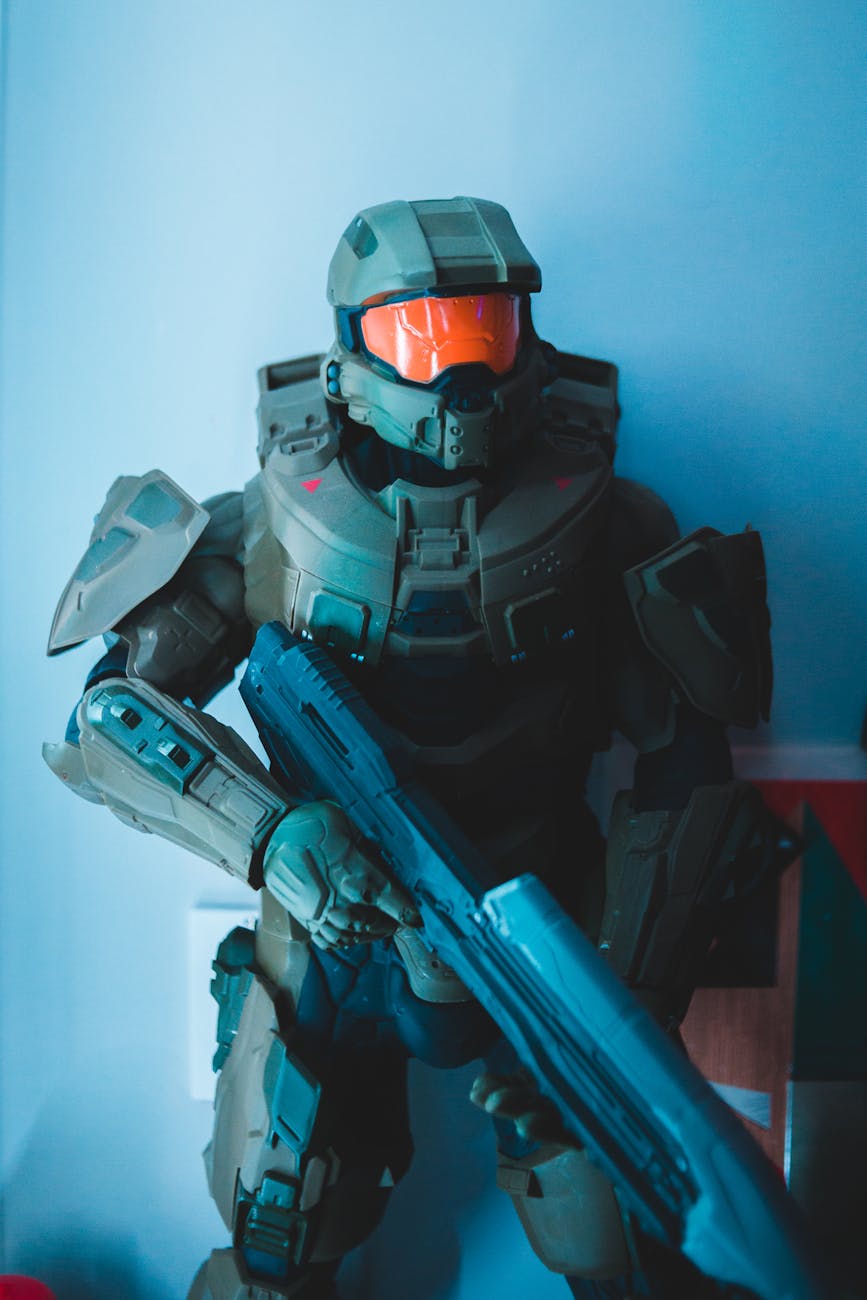
We’re playing a battle game and we need to assemble a team of soldiers. A strategic leader wouldn’t just pick soldiers at random. The strategist would analyze each soldier’s abilities and holistically decide what soldiers may be better suited for battle. You come across two soldiers and have to decide their ranks and placement.
Both individuals are helpful, but in their own ways. It’s up to you to figure out how to make them work best for you and themselves. You following? Keep reading.
We’ve opened the file of Soldier 4, who we’ll lovingly call Numba 4. Numba 4, who’s been part of the battalion for 5 years now, has the following stats:
- Stamina: 50/60
- Agility: 43/60
- Wisdom: 53/60
- Avoidance: 55/60
- Charm: 49/60
Based on those numbers, one may think that Numba 4 would be a great option against a stronger opponent, so long as he has a proper team of people with him. He needs more support but is still fine in most situations. He’s not necessarily your top choice, but he’s a fantastic B rank option if all of your A ranks are unavailable for battle.
Soldier 13, similarly referred to as Numba 13, has been part of the battalion for 15 years and has a different set of stats:

- Stamina: 22/60
- Agility: 60/60
- Wisdom: 20/60
- Avoidance: 59/60
- Charm: 5/60
Looking at Numba 13’s strengths and weaknesses, a strategist may notice that the majority of her stats are well below average, meaning that she’s going to need much more back-up on the battlefield. You also notice that in the categories she scores well in, she’s excels at. She’d maybe work better behind the scenes, helping the battalion prepare for battle in a specialized role that almost exclusively utilizes her strengths. You decide to assign her rank D; she’s available if you need someone to help out, but she’ll likely need lots of support in fields other than her specialty.
Numba 13’s stats more closely mirror those of auties — sporadic and unevenly distributed, with some categories being uncharacteristically high, and others being uncharacteristically low. The neurotypical brain’s stats may more closely resemble Numba 4’s — more equally distributed across the categories.
For an individual suspected of having autism, the initial evaluative categories may look something like this:
- Relationship to people
- Imitation
- Emotional response
- Body use
- Object use
- Adaptation to change
- Visual response
- Listening response
- Taste-smell-touch response and use
- Fear and nervousness
- Verbal communication
- Non-verbal communication
- Activity level
- Level and consistency of intellectual response
- General impressions
And as you’d suspect, those numbers would vary from person to person, regardless of neurological classification. But with the neurodivergent brain, and more specifically the autistic brain, those numbers would show much more variance from each other and the stats of other people. With that many attributes to organize, it’d be impossible to fairly represent all autistic people linearly!
Enter the wheel.

So no, autism isn’t exactly a spectrum. Rather, it’s a collection of stats in the shape of a wheel. And based on where they lie on that wheel, a licensed, board certified clinician will score individuals holistically to determine their level of required support on a scale of 1-3 (in newer research, 1-5). No one is more or less autistic than anyone else. The level of support necessary, however, varies. That’s what measured… the level of required support. Not the level of autism. Make sense?
So… reason number 3: It’s just plain incorrect. I don’t want you saying someone looks/acts like they’re “on the spectrum” because, simply put, there’s no spectrum to begin with. The term “spectrum” in this use is problematic and scientifically… well, wrong.
4) It’s insulting to actual autistics.
Let’s keep it 100: saying someone is “on the spectrum” in reference to behavior deemed unacceptable, weird, or rude is becoming more and more prevalent. And this comment is probably gonna strike some nerves, but I mean… it’s true: The use of “on the spectrum” in this scenario is literally the same as calling someone “retarded.” Think about it. It is. And we’ve seen what happened to the word retarded and the original individuals medically associated with it. Like, by actual medical professionals.
Now, for those who don’t know, retarded was rightfully deemed a slur years ago because of the transformation of its original use to describe a person with a cognitive delay into a term to describe someone who is or does something dumb/stupid/crazy/whatever else.
As a result, people who were clinically referred to as “mentally retarded,” a group that previously included people with intellectual disability (ID) and other forms of cognitive/neuro-developmental disorders, were seen as all of those negative words: dumb, crazy, stupid, the list goes on. Regardless of severity.
This kind of association may not bother the average person, but if you’re related to someone with ID, the term could be extremely hurtful. And further more, ID comes in levels too. This means that someone who is actually clinically diagnosed with mental retardation, now exclusively referred to medically as intellectual disability, may be able to understand the word “retarded” being used in a non-favorable way. This specific scenario actually happens much more than you’d think. (Seriously, read this article about just how many people are clinically diagnosed with ID and do the math.)
So basically, that means that these amazing individuals and their loved ones can be hit with verbal strays simply because of — you guessed it — stereotypes. So now a whole group of people are hurt and offended because another group of people can’t seem to find kindness in their words for someone else. Instead, they’d rather mock an individual for looking and behaving differently.
“On the spectrum” in reference to unusual or deviant behavior is the new “retarded.” And the same thing that happened to those with ID and other forms of neuro-developmental and cognitive disorders is going to happened to those with autism if we keep at this pace. I don’t like that, and you shouldn’t either.
So, reason number 4: It’s offensive to actual autistic people. I don’t want you saying someone looks/acts like they’re “on the spectrum” because, in short, you’re not just teasing the one person you’re referring to. You’re actually mocking a whole community of people. People with big brains and equally big hearts. People who deserve to be accepted and loved just as much as any of us do. And you’re making a mockery of the love and dedication invested into these people by their families and caretakers. Really, it’s rude and hurtful.
Conclusion
So next time you feel temped to say someone “must be on the spectrum,” I implore you to reconsider. If you wouldn’t want someone calling your child, loved one, pet, or any other being that you care deeply about retarded, then don’t say someone looks or acts like they’re on the spectrum. Period.
Remember the people you’re inadvertently referring to are still people. Not jokes. Not memes. But real people with real families and real obstacles that they conquer daily.
Remember that the statement isn’t even correct, but rather a blanket statement that upholds a false perspective of an entire group of people. It’s a stereotype. Not truth.
Remember that the statement, when made in malice, offers absolutely no assistance or positive enrichment to the recipient’s life and is unnecessary. If you’re that concerned about the behavior, do something about it. Maybe start with an autism evaluation 🙂
Let’s improve today to create a better tomorrow, one positive remark at a time.
And as always, please remember: I’m proud of you. Keep going. You’ve got this!
About the Author
Alexandra is the founder of the ‘Tism Things platform and owner of online business The Shop by ‘Tism Things. A proud stay-at-home wife and mama to two amazing, smart, and empowered littles, Alexandra frequently spends her time learning about autism and ADHD, its effects on families and caregivers, and ways to support individuals with either or both conditions. Driven by her son and husband’s autism and ADHD diagnoses, Alexandra prides herself on employing creative methods to adapt her household into one that welcomes people of all neurological types, aiming to foster a sense of inclusivity, understanding and acceptance among anyone’s path she crosses.
When she’s not in a ’tism rabbit hole on the internet or playing with her babies, she’s likely out shopping, cooking something yummy, helping out her grandparents, or out in the garden trying to keep her plants alive in this Georgia heat. Honestly, probably that last one.
 'Tism Things Blog
Sound off!