

A. Gregory | 4/4/2024
This post is especially helpful for parents of children with ARFID, but is just as great for parents looking to discreetly expand their infant or toddler’s diet. My kid’s preferred texture is purée the consistency of applesauce or yogurt. If that sounds like your kid, definitely keep reading because this is for you, friend!
So, if you’re new here, welcome! Some things you should know: my son has autism. He’s also an abnormally picky eater, a condition known as ARFID. ARFID, or avoidant/restrictive food intake disorder, is a condition that can occur in people without autism, but many autistic people have it. ARFID can make simple things, like eating at a new restaurant or trying a favorite food prepared in a different way, a scary and frustrating experience for affected people.
Part of autism is the need for routine and familiarity because it fosters a sense of predictability — something the autism brain needs to thrive. Familiarity brings about comfort, which is something that many people with autism lack when experiencing anything even remotely new… including food. So logically, the best solution for that would be to eat the same few things, prepared the same exact way, served exactly how you remember, until forever. Wouldn’t it be amazing if life could be that simple?
Unfortunately, eating the same things every single day can bring about issues. Nutritional deficiencies and constipation can be two big problems, both of which our family experienced with our son. Especially constipation. Goodness.
When he was a little baby, I’m talking roughly 1 to 1 1/2 years old, our baby boy was eating GOODT. I’m talking salisbury steaks over wild rice, carrots, peas, green beans, chicken, stuff like that. Then around 2, things changed. My husband says it was right when we went to the hospital to deliver our daughter. Our son had to spend two days exclusively with his Mimi, which threw his entire routine out of whack and, he believes, caused a HUGE eating regression. He could be on to something.
But either way, our once happy snacker and food tester turned into a toddler who feasted exclusively on a handful of things, most of which weren’t veggies or anything even remotely healthy.
When he was an infant, I had taken up making his purées from scratch. Nothing crazy — just blending up raw veggies and serving them to him until he got his teeth in. He was a pandemic baby, and I wasn’t really trusting the pouched foods at the time. Once the supply chain stuff worked itself out and puréed pouches became more available in my area for babies, we started him on those. All was well, until the flavors he preferred the most became more and more scarce, causing prices to jump like crazy. After about a month of paying for his over-priced purées that consisted of nothing special, I decided it was time to jump in and make his stuff myself.
The Materials
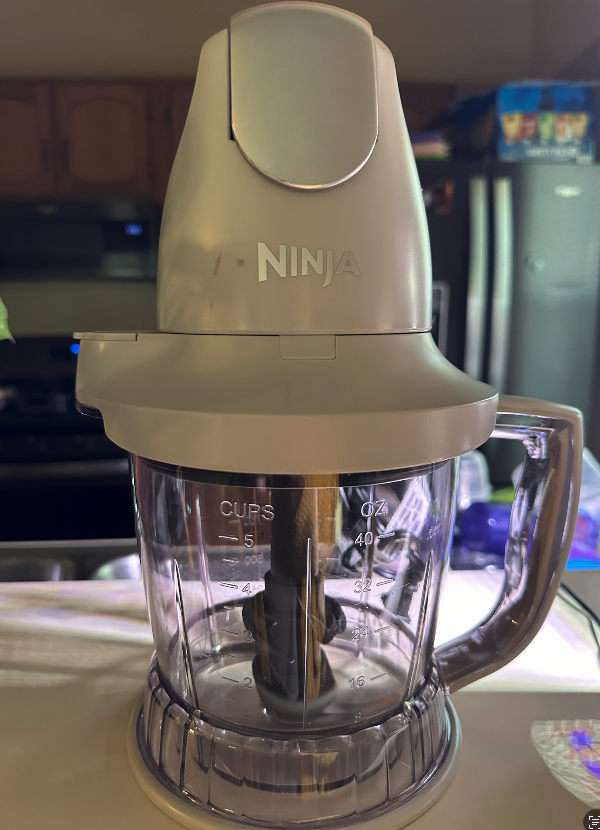
I invested in this bad boy — this food processor is my partner in crime. I bought it from Walmart.com, refurbished because I wasn’t even sure if I was gonna be doing this long term and didn’t want to overspend. $42, shipping included.
It holds 5 cups comfortably… but honestly, I’ve held more than that. It comes with a lid for storage. And the best part is that it has a built-in handle and spout, perfect for pouring those messier blends. Others food processors work well, but baybee… this thing here is the bomb.com.
Sidebar: I will forever recommend Ninja because their products are honestly the truth. Considering the quality of the materials and the reliability of the products, their brand is affordable and well worth the money. I’d have to use both hands to count the amount of Ninja products we have in our home. (Ninja, if you’re reading this, I’d love to be a brand ambassador for y’all… hit me up!)
I went to Amazon and searched for silicone ice cube trays with lids and found these. They were great for when my son was younger and eating smaller portions. After some searching, I found these that are just as marvelous; they have bigger cubes, perfect for bigger serving sizes or thicker blends. They measure at exactly 2 oz, which is great for people who need to log quantities or prefer to just purée single ingredients and blend them in the bowl after heating. I’ve done both and can confirm that regardless of how or when you choose to mix, what matters most is the consistency at time of freezing.
The Process
I figured that if I was going to be making his stuff from scratch, that would be a good time to introduce some new fruits and veggies. To make sure things went undetected, I had to make the flavors match what he was already used to. So I got to taste-testing the baby food. Yuck. I know. But, I learned that the majority of his veggie purées were apple-forward. The fruit ones were either apple, banana, or berry-forward. Look at me, sounding like a food critic. 😉
Texture Matching
I knew that if my plan was going to work, I’d need a product that could get the purée very fine in texture, but still easily spoonable. No weird lumps or bumps. No grainy texture. No dripping or wateriness. I also knew that for the sweeter flavors, I’d need to mix in some foods that could make the purée creamy and thick, because my son was used to his fruit-based blends typically including banana or oatmeal. (I believe those count as level 2 purées, but don’t quote me on that… I haven’t bought baby food in a minute, lol.) Those are the textures my son was used to at that point, so that’s what I’d have to recreate.
Bananas and avocados became my staples for creaminess. I tried coconut milk and yogurt, but my son didn’t care for the flavors of either. I also tried a few variations of an oat-based thickener, similar to the baby oatmeal flakes you may find in the baby aisle at the store. I had to grind up the oats suuuuuper finely, basically into a flour. After mixing with some water and heating separately, it blended well into my fruits to basically make a yummy oatmeal-like breakfast.
Steaming & Blanching
The fruits blended better raw, with the exception of apples. Apples were always steamed unpeeled. Veggies were always steamed, or blanched at the bare minimum. Because veggies lose nutrients as they cook, it’s important to ensure that they remain as close to raw as possible. Steam just enough to blend smoothly. Any longer is a waste of product because those important nutrients are practically gone, and frankly, the softness could ruin the texture of the purée by making it too watery. We want it smooth, but we also want it to hold up.
I learned that green whole veggies, like broccoli, peas, and green beans work best when they’re steamed to a bright green color. Green leafy veggies, like kale and spinach, blended better when they were steamed much longer, until a deep green color. Spinach never took too long to steam; 10 minutes max in bulk. Kale usually took a minimum of 20 minutes when I made it in big batches.
And I learned that to cut back on sugar, unsweetened applesauce worked just fine in most applications. I really only used the sweetened for the kale blends, because kale can naturally be a bit bitter.
Carrots, butternut squash, and sweet potatoes are all veggies that are similar in texture and flavor when steamed and blended. I frequently would steam them together. I also would roast them if I had the time. Because squashes are seasonal and can be tougher to find where I shop when not in season, I would sometimes use the frozen butternut squash cubes from Aldi.
Speaking of squashes, both of my kids were loving the squash blend I made. I bought the squashes right as the season was ending so they tasted extra yummy… but unfortunately, that was the last time I was able to get them before the price jumped. I shop at my local farmers market for all of the kids’ fruits and veggies, and their pricing and availability are largely based on season.
Helpful tip: If you have the freezer space, I highly recommend shopping for veggies and fruits while in season and then freezing them until you’re ready to blend. Most veggies freeze well if they’re peeled, cubed, and then blanched for a few seconds before freezing. I haven’t had any issues doing that with anything I’ve tried so far. When you’re ready to purée them, take them out of the freezer a little bit before hand to get slightly thawed and they should be just fine. If you have any other tips for preservation, comment them below!
Puréeing
Like I said earlier, that Ninja food processor has been my best friend, and I said that for a reason.
When I tried to purée in a standard blender, the mix was too puréed. Now, it could’ve been because I was using my Ninja blender that plays absolutely NO games when it comes to doing its job, but it left my mixes a bit too smooth. That would be perfect for stage 1 foods, but we’re shooting for stage 2 — thicker with some texture, but not a ton. Think applesauce or yogurt. We don’t want tomato soup consistency, but we don’t want a soupy mash either.
Part of what makes the Ninja food processor so great for this project is that
- The blades mimic what you’d see in a Ninja blender; they’re positioned on a pole that goes from the top of the processor (where the motor is) to the bottom of the cup. This setup allows for a more uniform blend in less time. Plus, there’s 4 blades, while the majority of food processors I’ve seen only have two — and they’re only located at the bottom of the cup
- You can control the speed more easily by pressing down on the top of the processor, versus pressing a self-holding button or a burst button
- The spout, y’all, the spout
- The handle!
- Lightweight and doesn’t take up a ton of space
- A bit quieter than your typical food processor (in my opinion, but I may be biased there 😉 )
The Blends
I made my version of my kid’s store-bought favorites, and he seemed to like my versions more! Plus, we knew exactly what was going into his body. And we were saving money, which made the switch from store bought that much sweeter!
After much success with the original recreations, I started trying out my own combos on him. Here are some of his faves:
- Avocado banana
- Apple broccoli
- Kale spinach
- Apple sweet potato
- Lean Green (avocado, broccoli, and kale)
- Apple carrot
- Banana nut
Those are just a few, but I’ve made close to 50 blends. Keep in mind that these recipes are geared towards kids, but the textures can be adjusted to accommodate any one at just about any stage of eating.
Now, I love y’all and I want y’all to be great. I’m working on an eBook of my recipes to save you guys some guess work. If any of those recipes sound like something your kiddo would love, subscribe to emails from ‘Tism Things and be the first to know when the book drops!
And as always, please remember: I’m proud of you. Keep going. You’ve got this!
About the Author

Alexandra is the founder of the ‘Tism Things platform and owner of online business The Shop by ‘Tism Things. A proud stay-at-home wife and mama to two amazing, smart, and empowered littles, Alexandra frequently spends her time learning about autism and ADHD, its effects on families and caregivers, and ways to support individuals with either or both conditions. Driven by her son and husband’s autism and ADHD diagnoses, Alexandra prides herself on employing creative methods to adapt her household into one that welcomes people of all neurological types, aiming to foster a sense of inclusivity, understanding and acceptance among anyone’s path she crosses.
When she’s not in a ’tism rabbit hole on the internet or playing with her babies, she’s likely out shopping, cooking something yummy, helping out her grandparents, or out in the garden trying to keep her plants alive in this Georgia heat. Honestly, probably that last one.
 'Tism Things Blog
Sound off!